See the article’s sources and scope. Our editorial standards
What offset measures
Wheel offset is the distance between the wheel's centerline and its hub-mounting surface, normally expressed in millimeters. Positive offset places that mounting surface toward the outside face; negative offset places it toward the inside.
Keeping width constant, increasing positive offset moves the wheel inward. Decreasing it moves the wheel outward. Tire Rack's explanation provides a useful reference for the definition.
Width changes the picture
You must consider width and offset together. A wider wheel extends farther on both sides of its centerline before any offset change is applied.
For a nominal comparison, convert the width change from inches to millimeters, divide it by two, and account for the offset change. These calculations describe relative position; they are not a vehicle fitment approval.
A worked example
Compare a 7-inch-wide wheel at +48 mm with an 8-inch-wide wheel at +40 mm:
- Half the width increase is 12.7 mm.
- Offset decreases by 8 mm.
- The outer nominal edge extends 20.7 mm farther outward.
- The inner nominal edge extends 4.7 mm farther inward.
This example is geometry only. It is not a recommended BRZ configuration. Nominal wheel width is measured between bead seats, and actual lip dimensions can differ.
What the numbers cannot confirm
Wheel spoke shape, brake clearance, tire shape, hub details, body clearance, suspension movement, and the vehicle's setup still matter. A matching bolt pattern or a small diameter change is not enough to establish compatibility.
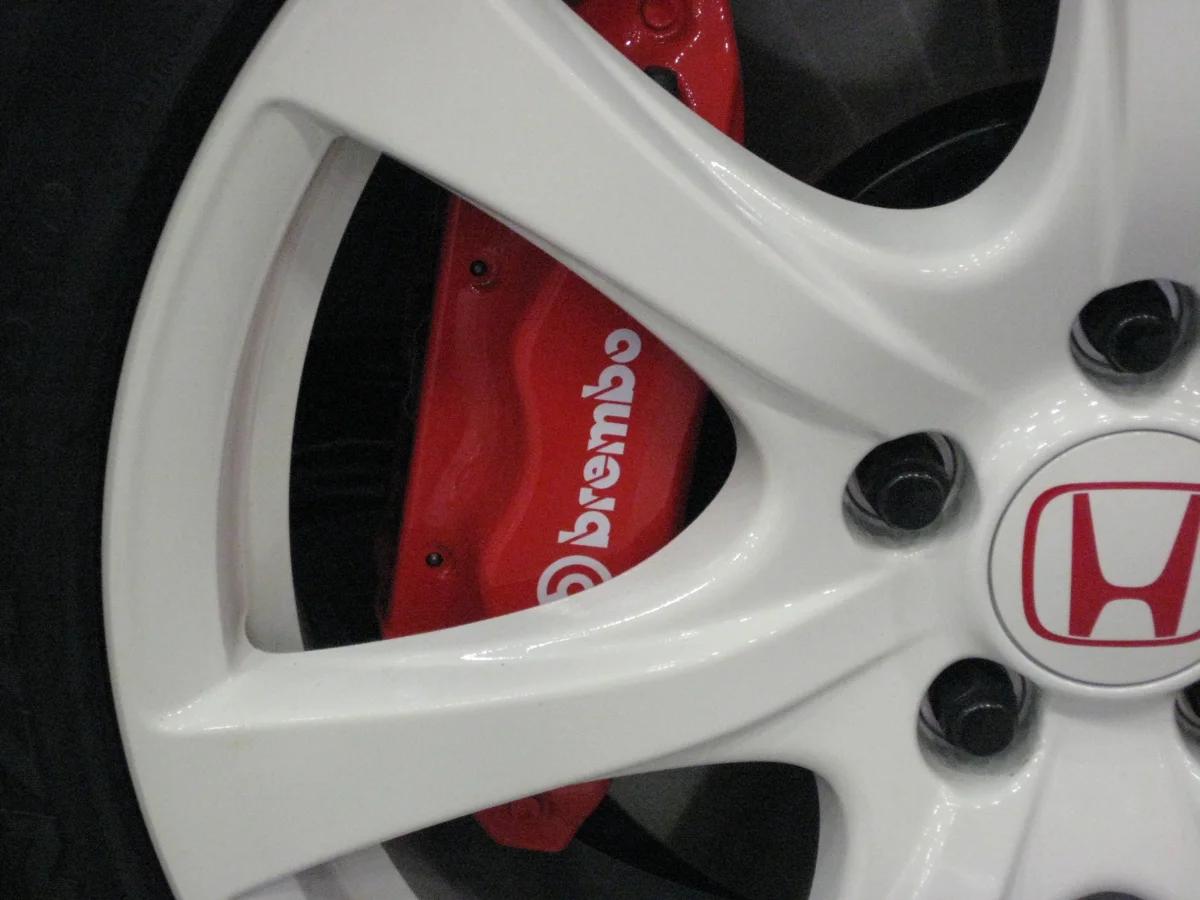
Use our tire size calculator for a nominal diameter comparison, then verify the proposed combination with the component manufacturers and a qualified installer. The pictured wheel is a Civic Type R detail, used to illustrate the subject.
Sources and research
- Tire Rack: wheel offset definitions · Checked 2026-09-29