See the article’s sources and scope. Our editorial standards
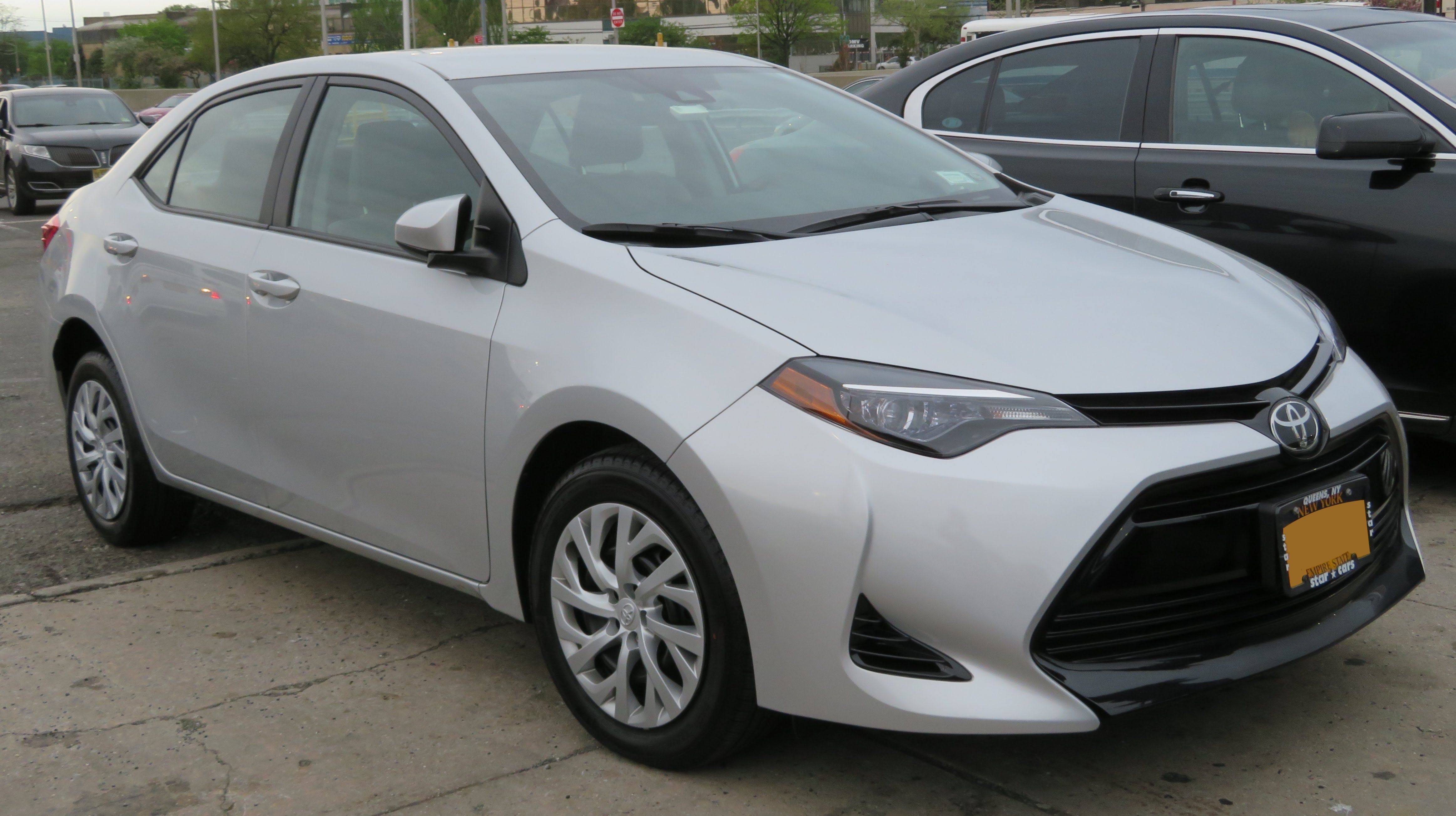
This guide covers US-market 2014–2019 Toyota Corolla sedans. It does not cover the Corolla iM or the 2019 Corolla Hatchback. A listing that says only “2019 Corolla” needs a body-style check before you compare specifications or order parts.
We have not road-tested or inspected a Corolla for this article. Toyota publications and a manufacturer service-campaign document support the specific facts below. The records workflow and downloadable comparison sheet are Gearline's planning tools, not a claim that a particular used car is reliable.
Separate the model year, body and grade
Write the VIN, model year, sedan body, grade and transmission at the top of your notes. Confirm them against the car and its documentation rather than copying the listing heading. The US sedan generation introduced for 2014 is the scope here; the same Corolla name appears on other bodies and markets.
The 2017 US specification reference below illustrates an important distinction: an LE Eco is not simply a normal LE with an economy driving mode. Toyota described a different Valvematic version of the 1.8-liter engine. Do not use this snapshot to assign specifications to every 2014–2019 car.
| Version | Published engine output | What to verify |
|---|---|---|
| Grades other than LE Eco | 1.8-liter four-cylinder; 132 hp | Exact grade, transmission and installed equipment |
| LE Eco | 1.8-liter Valvematic four-cylinder; 140 hp | LE Eco identity and engine-specific parts/documentation |
These are manufacturer engine ratings, not wheel horsepower or our measured performance. A sporty badge, wheel or bumper does not establish a different engine. Record modifications separately from the factory configuration.
Verify the CVT campaign record
Toyota's Special Service Campaign JSD concerns the CVT in certain 2014–2017 Corolla vehicles. The August 2018 dealer letter says JSD replaced the earlier J0D campaign after reports of harsh shifting or abnormal engine speed following that earlier update. It calls for software inspection and, where needed, further work under its procedure.
Consequently, an invoice mentioning only J0D does not by itself establish JSD completion. Ask a Toyota dealer to check the VIN and explain the current status, and retain the dated confirmation with the purchase records. The document's model-year scope is not permission to label every 2014–2019 Corolla affected.
Treat JSD as a manufacturer service campaign, not as a generic name for every CVT fault. Current eligibility, coverage and the exact remedy must be confirmed for the VIN; this historical letter does not promise free transmission work today.
If the seller reports hesitation, a warning light or an earlier transmission repair, request the actual diagnostic and repair paperwork. “Software done” and “transmission replaced” are different claims. A fault code is a starting point for diagnosis, not a complete purchase decision.
Make the inspection answer specific questions
Arrange a cold start and an independent inspection before negotiating around a suspected repair. For a CVT car, ask the shop to assess operation and review the campaign history. For a manual car, ask about clutch operation and gear selection. Use the documentation for that transmission; do not apply a generic automatic-fluid instruction to both.
Ask the shop to identify what it inspected, what it observed and what it could not test. Include the underbody, leaks, cooling system, brakes, tire condition and collision-repair evidence. If the transmission has symptoms, request a written diagnostic scope and estimate rather than an optimistic guess about the cheapest possible cause.
Test the ordinary ownership details too: air conditioning, windows, locks, seating position and access to the rear seat. Bring the luggage or child-seat arrangement that matters to you and check it with the owner's permission. A manufacturer's published interior dimension is useful context, but it does not prove that your own setup fits.
Do not let a short trouble-free drive erase an unresolved warning light or missing documentation. Conversely, a service-campaign reference is not evidence that an otherwise unidentified car is defective. Keep the finding and the conclusion separate.
Build the service timeline
Sort invoices by date and mileage. For each, distinguish “checked” from “replaced” and keep the specified fluid or part identification. Ask for clarification when a receipt says only “full service.” A history report can supplement this process, but it does not replace the shop's invoices or inspection.
Find the Toyota maintenance and owner's documents for the exact model year and transmission. Mark the next action using both elapsed time and mileage where the applicable schedule requires them. This article deliberately does not provide one universal oil or transmission-fluid interval for all cars in the scope.
For outstanding safety recalls and service campaigns, start with Toyota's VIN lookup and NHTSA's recall lookup. Record the date. Ask a dealer about completed campaigns or an ambiguous result; an empty open-recall result is not a clean bill of mechanical health.
Put competing listings on the same sheet
Download the Toyota used-car worksheet. It leaves prices blank so you can use actual local evidence. Fill the same fields for each candidate: configuration, records, campaign status, inspection findings, asking price, purchase fees, insurance quote and immediate work.
Keep “unknown” separate from “zero.” A cheaper listing with an unresolved transmission symptom cannot be fairly compared by subtracting an invented repair price. Request diagnosis first, then compare the purchase outlay plus confirmed initial work. Keep the repair reserve visible as a separate planning choice.
Use the ownership-budget guide for the broader first-year plan and the fuel-cost calculator with your own mileage and fuel assumptions. If a Camry is also on your shortlist, use our 2012–2017 Camry guide to identify its different powertrain and inspection questions before comparing the totals.
Sources and research
- Toyota: 2014 US Corolla sedan snapshot · Checked 2026-10-26
- Toyota: 2017 US Corolla product information — 132 hp and LE Eco 140 hp · Checked 2026-10-26
- Toyota Special Service Campaign JSD dealer letter, hosted by NHTSA — pages 2–4 · Checked 2026-10-26
- Toyota: VIN safety recall and service-campaign lookup · Checked 2026-10-26
- NHTSA: VIN recall lookup and its limitations · Checked 2026-10-26