See the article’s sources and scope. Our editorial standards
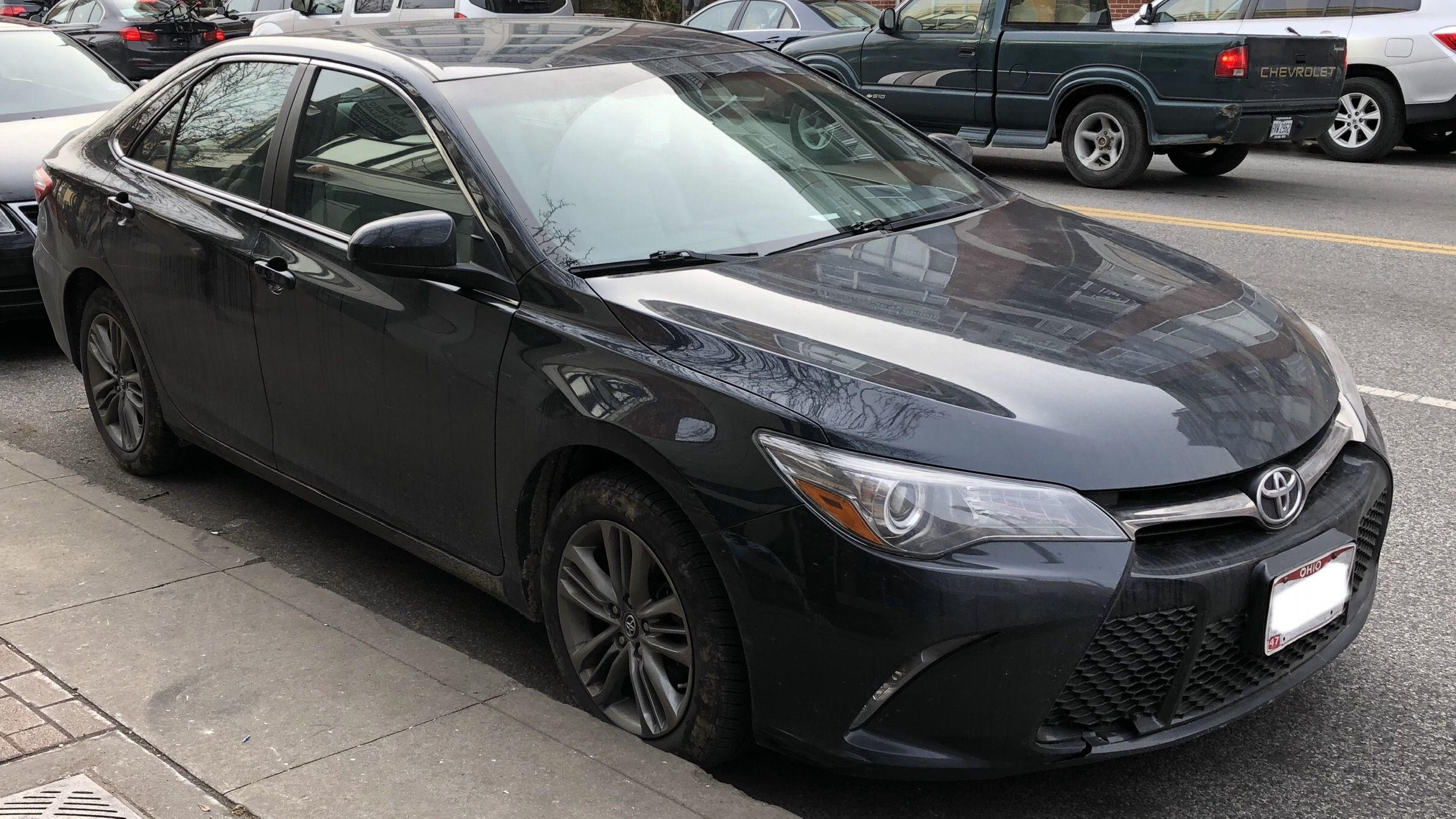
This guide covers US-market 2012–2017 Toyota Camry sedans. Its purpose is to help you separate the configuration, the service evidence and the costs of one actual used car. A Camry badge alone does not tell you which engine, transmission or inspection work you are buying.
Gearline has not inspected or road-tested the cars discussed here. The specification snapshot comes from Toyota publications; the inspection questions and worksheet are our research-based purchase workflow. They are not a reliability score or a market valuation.
Identify the engine before comparing listings
Toyota introduced this generation for the 2012 model year. The redesigned 2018 US Camry is outside this guide. Keep model year distinct from the year a car was first registered, especially when comparing imported listings.
Use the VIN and vehicle documentation to confirm the engine and exact grade. A seller's photograph of an SE badge is not proof of the powertrain. The following is a 2017 US snapshot, not a specification table for every year in the generation.
| Configuration | Published output | Purchase question |
|---|---|---|
| 2.5-liter gasoline four-cylinder | 178 hp | Does the VIN and service paperwork identify this engine? |
| 3.5-liter gasoline V6 | 268 hp | Are the inspection and repair quotes for the V6? |
| 2.5-liter hybrid system | 200 system net hp | Is there a separate hybrid-system assessment? |
The hybrid figure is the manufacturer's combined system rating. Do not add a gasoline-engine rating to an electric-motor rating yourself. Also avoid comparing a hybrid eCVT with a conventional automatic as if the names describe identical hardware.
Read the records as a timeline
Start a row for each dated invoice: odometer, exact work, fluid or part identification, and the shop that performed it. “Dealer maintained” is a claim until it is supported by records. A stamp that says “service” is less useful than an invoice showing what was inspected and what was replaced.
For a gasoline Camry, ask the shop to match the maintenance guide to the year and engine. For a hybrid, request the hybrid-specific documentation. Do not fill a gap by copying an interval from a different Camry generation or by treating a dashboard reminder as proof that work was completed.
Bring unresolved items to the pre-purchase inspection. For example: “The latest invoice records an inspection but no replacement; is replacement due under this car's schedule?” This creates a concrete question without declaring every undocumented item defective.
The 2012–2014 transmission question
Toyota bulletin T-SB-0312-17 describes intermittent torque-converter shudder under light load at roughly 25–50 mph in certain 2012–2014 Camrys with the U760 transmission. It supersedes T-SB-0034-14 and includes production/VIN limits. This is a technical bulletin, not a blanket recall or evidence that every Camry has the condition.
If the car fits that scope, ask for any diagnosis, torque-converter replacement and ECM calibration records. Give the bulletin to the inspecting shop and let it establish applicability. A vibration can have another cause; a buyer should not order a torque converter from a symptom description alone.
Record whether a shop could reproduce a symptom, under what conditions, and what remains unconfirmed. An old bulletin does not establish today's warranty coverage or promise a free repair. Obtain the current diagnosis and written estimate before relying on a seller's “just needs a fluid change” explanation.
Inspect a gasoline car and a hybrid differently
Ask for a cold start when arranging the appointment, then allow a qualified shop to inspect and road-test the car with permission. Request a written assessment of leaks, cooling-system condition, brakes, tires, underbody corrosion and signs of earlier collision work. Include diagnostic results and any limitations of the visit.
For a hybrid, add a hybrid-qualified assessment rather than accepting a dashboard battery graphic as a health certificate. Ask what was actually measured, whether warning codes are present, what the report cannot establish, and whether any quoted replacement includes labor and a written warranty. Leave high-voltage inspection to a qualified technician.
Separate three statements in your notes: the seller reports it, the shop observed it, and a document supports it. A clean-looking engine bay cannot substitute for those distinctions. If access or a test is refused, write “not checked,” not “passed.”
Check the VIN and campaign history
Use both Toyota's recall and service-campaign lookup and NHTSA's recall lookup. Save the lookup date and ask a Toyota dealer to clarify anything unresolved. A model-level bulletin, an open VIN recall and a completed repair invoice answer different questions.
NHTSA's VIN results have limits and do not show every completed recall or every manufacturer service campaign. “No open recalls” is therefore not a complete service history, and it says nothing about the wear items on the particular car.
Compare the total commitment
Download the Toyota used-car worksheet and use one candidate column per listing. Record the seller's asking price, an actual inspection quote, applicable purchase fees, insurer quote and immediate-work estimate. Keep an unresolved repair as “unknown” until someone supplies evidence and a price.
A useful comparison is purchase outlay plus identified initial work, followed by a separate running-cost plan. Keep a reserve separate from known work so the same expense is not counted twice. There are no current market-price estimates in this guide: local condition, paperwork and quotes determine the numbers.
Before committing, you should be able to explain why the engine matches your needs, what the inspection established and which costs remain open. Use our first-year ownership budget and fuel-cost calculator to organize your own figures. If you are also considering a smaller sedan, compare the Corolla buying workflow using the same evidence fields.
Sources and research
- Toyota: seventh-generation Camry introduced for 2012 · Checked 2026-10-26
- Toyota: 2017 US Camry product information — powertrain ratings · Checked 2026-10-26
- Toyota: all-new 2018 Camry, outside this guide · Checked 2026-10-26
- Toyota T-SB-0312-17, hosted by NHTSA — scope and supersession, page 1 · Checked 2026-10-26
- Toyota: VIN safety recall and service-campaign lookup · Checked 2026-10-26
- NHTSA: VIN recall lookup and its limitations · Checked 2026-10-26